The right front door changes the way a home feels before you have even stepped inside. When comparing composite vs aluminium doors, the decision usually comes down to the character of your property, the look you want to create and how you expect the door to perform through years of British weather. Both are premium choices, but they deliver very different results.
For homeowners in Wimbledon, South London and Surrey, there is rarely a one-size-fits-all answer. A period terrace may benefit from the familiar depth and traditional styling of a composite door, while a contemporary extension may call for the crisp lines and generous glazing of aluminium. The best choice is the one that brings lasting warmth, security and confidence to your home.
Composite vs aluminium doors at a glance
Composite doors are designed to recreate the substantial appearance of a traditional timber door while avoiding the regular painting and upkeep associated with real wood. Their construction combines several materials, typically including an insulating core, reinforced frame and durable outer skin. The result is a solid, well-insulated entrance door available in a wide choice of panel designs, colours and decorative glazing options.

Aluminium doors use slim, strong metal profiles to achieve a more architectural appearance. They are especially effective where large glass panels, contemporary sightlines or a bespoke layout are priorities. Aluminium is commonly chosen for modern front doors, glazed entrance doors, French doors and wide-opening configurations that connect a home to a garden.
Neither material is automatically better. Composite is often the natural choice for a traditional front elevation and everyday thermal comfort. Aluminium is often the stronger design choice where clean geometry, glass and a modern finish lead the brief.
Warmth and energy efficiency
A front door should feel reassuringly solid on a cold January evening, not allow draughts around the frame or leave a chilly patch in the hallway. Composite doors perform particularly well here. Their insulated cores and tightly engineered seals help reduce heat loss, making them an excellent choice for homes replacing an older timber or poorly fitted uPVC entrance door.
Modern aluminium doors can also offer excellent thermal performance. Quality systems use a thermal break within the frame, separating the interior and exterior sections of aluminium to limit heat transfer. This is a vital detail: older aluminium products could feel cold to the touch, whereas today’s thermally broken systems are designed for comfortable, efficient homes.
The overall performance depends on more than the door leaf alone. Glass specification, frame design, threshold detail and installation quality all matter. A high-performing door fitted inaccurately can still cause draughts and poor closing, which is why professional measuring and fitting should form part of the decision rather than an afterthought.
Security that feels built in
Both composite and aluminium doors can provide a very high level of home security when they are specified with quality locking hardware, reinforced frames and secure glazing where required. The difference is more about construction and appearance than a simple ranking of strength.
Composite doors have a naturally substantial feel. Their thick door slabs, reinforced sections and multipoint locking systems make them a popular choice for family homes where security and privacy are key concerns. Many homeowners also appreciate the visual reassurance of a solid panel door, particularly on a street-facing entrance.
Aluminium has exceptional inherent strength, allowing slimmer frames without compromising the structure. This makes it well suited to larger glazed designs, sidelights and statement entrance doors. If you want to bring more natural light into a dark hallway without making security feel like a compromise, an aluminium design can be particularly effective.
Whichever route you choose, ask about the full specification. A secure door is a complete system: frame, hinges, cylinder, lock, glazing, handle and installation all need to work together.
Style, colour and kerb appeal
This is where the contrast between composite and aluminium doors becomes most visible.
Composite doors offer a broad range of classic and contemporary styles. You might choose a traditional four-panel layout for a Victorian or Edwardian property, add patterned or obscured glazing to protect privacy, or opt for a heritage-inspired colour such as deep blue, green, black or a refined grey. Woodgrain finishes can provide the charm of timber without the ongoing concern of sanding, staining and repainting.
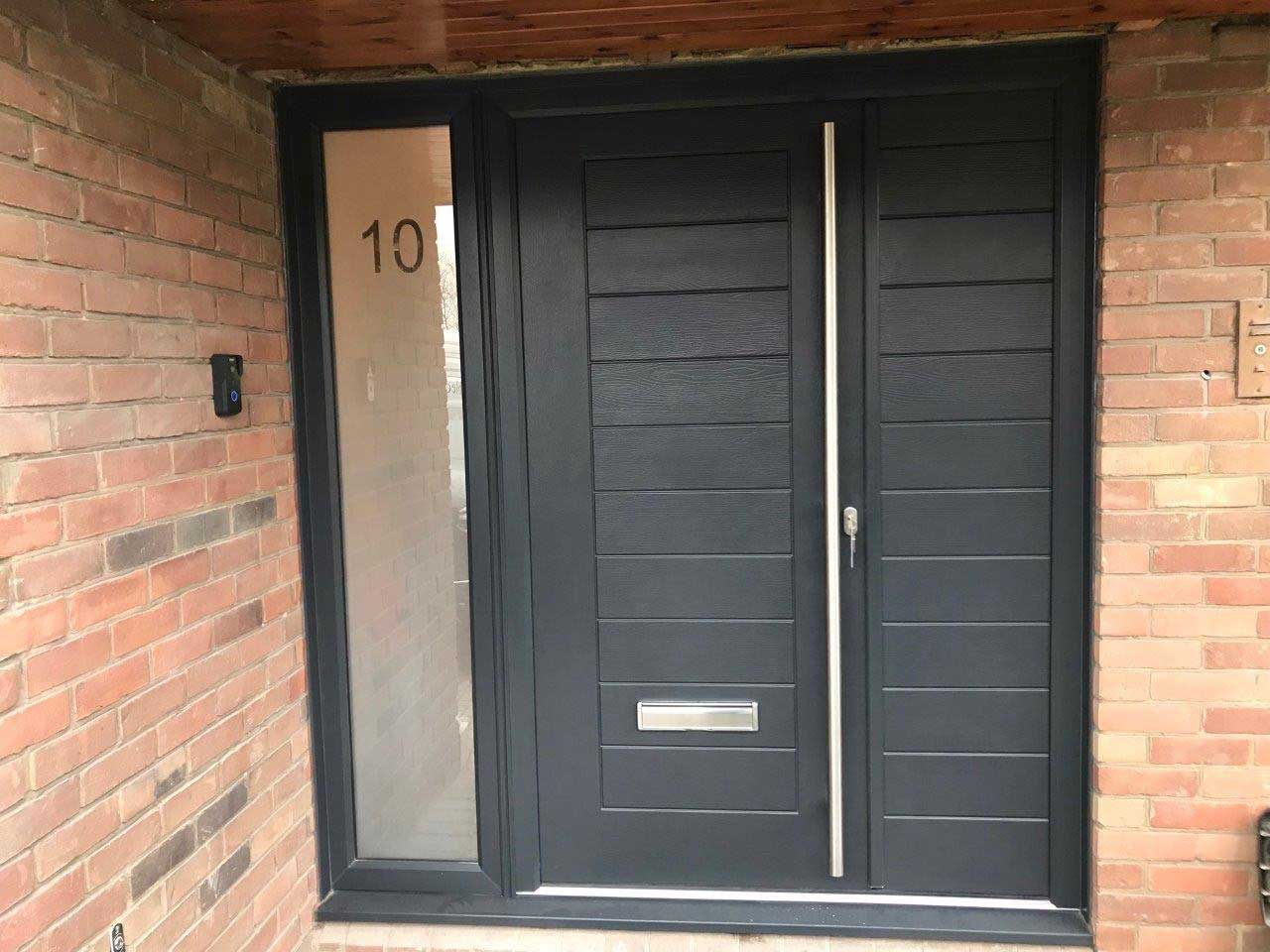
Aluminium doors create a sharper, more tailored look. Their slim profiles and powder-coated finishes suit modern homes, architect-designed extensions and properties with aluminium windows, bifolds or large patio doors. Dark shades remain popular, but aluminium can also be specified in softer neutral tones or more distinctive colours to make the entrance feel individual to the property.
For conservation-sensitive or period homes, the surrounding architecture should guide the design. A door that looks striking in a showroom may feel out of place against original brickwork, sash windows or decorative porch details. Equally, fitting a heavily traditional door to a contemporary glazed extension can interrupt the clean lines that make the design work. The aim is not simply to choose a beautiful door, but one that belongs to the house.
Glazing makes a greater difference than many expect
A glazed panel or sidelight can transform a dim entrance hall, but it needs careful consideration. Composite doors can incorporate decorative, frosted or leaded glass that complements traditional architecture. Aluminium systems allow larger panes and narrower surrounding frames, creating a brighter, more open arrival space.
Privacy is easily managed through obscured glass, textured finishes or thoughtful positioning. For homes facing a busy pavement or road, this can provide daylight without exposing the hallway to view.
Maintenance and long-term appearance
Both materials are chosen partly because they are lower maintenance than timber. Composite doors generally need only occasional cleaning with mild soapy water, plus a periodic check of hinges, handles and locks. Their outer surface is made to withstand rain, sun and everyday use, though it is sensible to avoid abrasive cleaners that could dull the finish.
Aluminium is also straightforward to maintain. Powder-coated finishes are highly durable and do not need painting, while the frame can be cleaned with a soft cloth and mild detergent. Its resistance to warping, swelling and corrosion makes it particularly appealing for exposed locations.
There are practical differences to consider. A composite door can have a more textured, wood-like finish, which may hide minor marks better in a busy family household. Aluminium has a smoother, more precise surface, but a prominent scratch may be more noticeable depending on the colour and finish. Neither should be treated as maintenance-free, yet both can retain their appearance well with simple care.
Cost and value: look beyond the initial price
Composite doors are often more accessible in price than bespoke aluminium entrance doors, particularly for standard-sized openings and traditional panelled designs. They offer strong value for homeowners who want a substantial, attractive and efficient front door without paying for large-format glazing or custom metalwork.
Aluminium doors tend to command a higher investment. The material, manufacturing process and ability to create tailored designs all contribute to the cost. However, for a home where the entrance is a central architectural feature, or where you are matching existing aluminium glazing, that investment can be well justified.
It is worth comparing like for like. An apparently lower quote may exclude the locking specification, decorative glass, colour finish, sidelights, disposal of the old door or the standard of fitting. A carefully specified installation should provide clarity about what is included and leave you with a door that performs as confidently as it looks.
Which door is right for your home?
Choose a composite door if you want a warm, substantial front door with traditional character, excellent insulation and a wide range of decorative styles. It is especially well suited to period homes, family properties and homeowners replacing an ageing timber door while retaining a familiar appearance.
Choose aluminium if your priority is contemporary design, slimmer frames, larger glazed areas or a bespoke entrance statement. It is an excellent match for modern homes, extensions and properties where aluminium windows or doors already shape the overall design.
There is also room for a mixed approach. A composite front door can preserve the character and privacy of a traditional street-facing elevation, while aluminium patio or bifold doors bring light and a more open feel to the rear of the house. The materials do not need to compete across every part of the property.
A good door should make coming home feel better: quieter when the street is busy, warmer when the weather turns and more secure every time it closes. Viewing the options in person and discussing the details of your opening, architecture and priorities will make the choice far clearer than selecting from a photograph alone.

- Are Triple Glazed Windows Worth It for Your Home? - 25 July 2026
- Composite Doors: A Better Entrance for Your Home - 23 July 2026
- What Is the Best Glazing for Noise Reduction? - 21 July 2026
Categories: Aluminium Doors, Composite Doors in London